On The Konmari Cleaning Method A Book Review
Introduction
I am probably a minimalist without ever wanting to be one. I prefer to own few things of high quality instead of multiple items of low or mediocre quality. But I have never purposefully engaged with keeping order and was never interested in cleaning or decluttering. My parents always had trouble in convincing me to clean my room.
But i looked into related topics to decluttering such as anti-consumerism and Epicureanism. I was interested in how advertisements overshadow the true desire and plant artificial desires. When i look around me, all these items that I own tell a story of my previous decisions. And when you look around, dear reader, it is the same. Hence, I am mindful in what items i choose to surround me with.
Nevertheless, I never looked into decluttering systems such as Swedish death cleaning or the KonMari system.
So I was delighted to find a copy of the book The Life-Changing Magic of Tidying Up by Marie Kondo in one of those communist bookshelves.
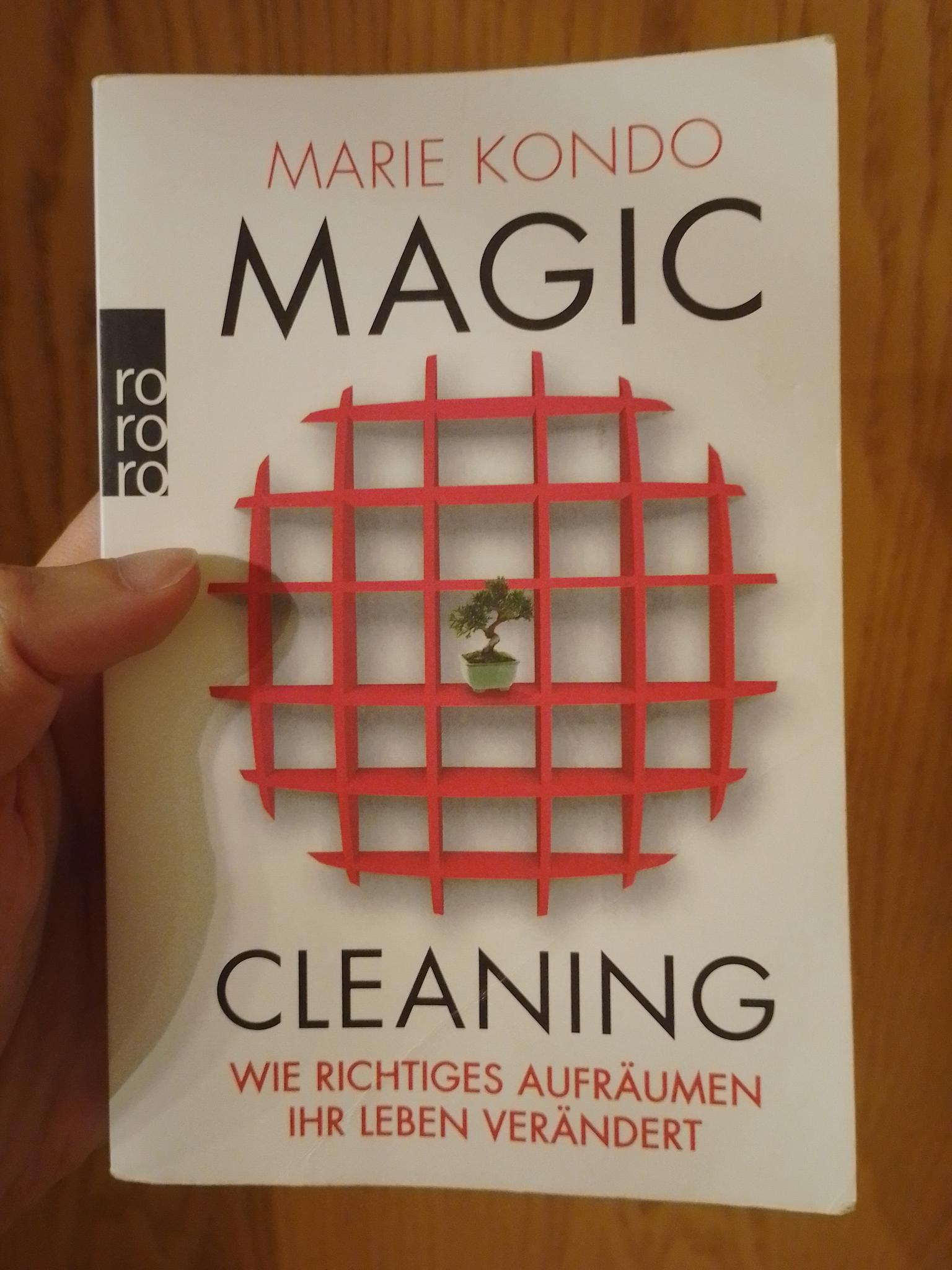
Marie Kondo is a famous decluttering coach who has created her own system. According to the book itself, she was possessed by decluttering as a child. I even suspect that she is not neurotypical. She has made her made her passion to her job. Her approach is slightly esoteric and inspired by Shinto.
Being Japanese, some of her advice does not fit completely my situation.
I read her book in half a week, as it is very easy to read. And now i will present the main points, so I do not have to read it again and you can also save yourself the time.
The KonMari System
The goal of the KonMari system is to be surrounded only by items that spark joy.
For this, there are two necessary steps that have to be done in exactly that order:
- Decluttering. Throw away what does not spark joy.
- Organizing. All items of the same category should be at the same place.
It is recommended to declutter everything in a short timespan instead of little by little. This way, the tidy home is so overwhelming that you never need to repeat this process again, as it will simply stay decluttered according to Mrs. Kondo.
One should declutter not room by room but according to categories, such as clothing, books, etc. For this, everything of one category should be put on a pile. Then, each object should be held in the hand and it should be felt whether it sparks joy or not. Then, the object should be either kept or you let go of it.
You should not listen to music when doing this, as this will disrupt the conversation between your heart and the objects. After a while, you will develop intuition on what makes you happy, and what items you want to surround you with.
It is important to hold each object in your hands, even photos and books. You cannot decide whether a book makes you happy by just looking at it, without taking it in your hand.
When giving it away, you should thank the objects. As an example, you can say “Thanks for keeping my feet warm and safe during all those hikes we did together” to your hiking boots. Even if you never used an item it probably sparked joy during the shopping. Or if it was a gift that you did not like, you can say “Thanks, for coming into my life”. Only after this, you can give it away. It is always the same cycle: acknowledging the purpose of the object, thanking it, and then letting go.
Another recommendation is to never show your family what you plan to declutter. Otherwise, they will become woeful when they see your old souvenirs from vacations, or your old child toys.
When organizing, it is recommended to also thank the objects.
One life-hack is to roll T-shirts and tops, instead of stacking them. When you stack them, you always wear the top three and do not even see the lower ones. When traveling, I already do this and it is great to be able to access all shirts directly. Mrs. Kondo thinks that the upper clothing presses on the lower clothing, and hence the lower clothing is not happy with the situation.
Conclusion
The big question is, if i used this method to declutter my living situation. Of course not. But I will. Probably. Some day.
I am quite happy with how I am living. Most of the recommendations I already implement. I have given away some board games previously. Not because I do not like them, but because they remind me of my ex-girlfriend and her highly competitive way of playing and trying to put me down.
I only have few of the objects that are mentioned in the book, such as bags, or cosmetic samples. I also do not own that much clothing. Probably, I am not the target group of the book. Well, I did not buy the book to begin with.
Still, I agree with the main part of living an attentive live. Do not get me wrong. I do not care, whether people have lots of stuff or little. But I highly welcome when people are mindful of the objects that they spend their time with.